Comprehensive Step-by-Step Restoration Protocol
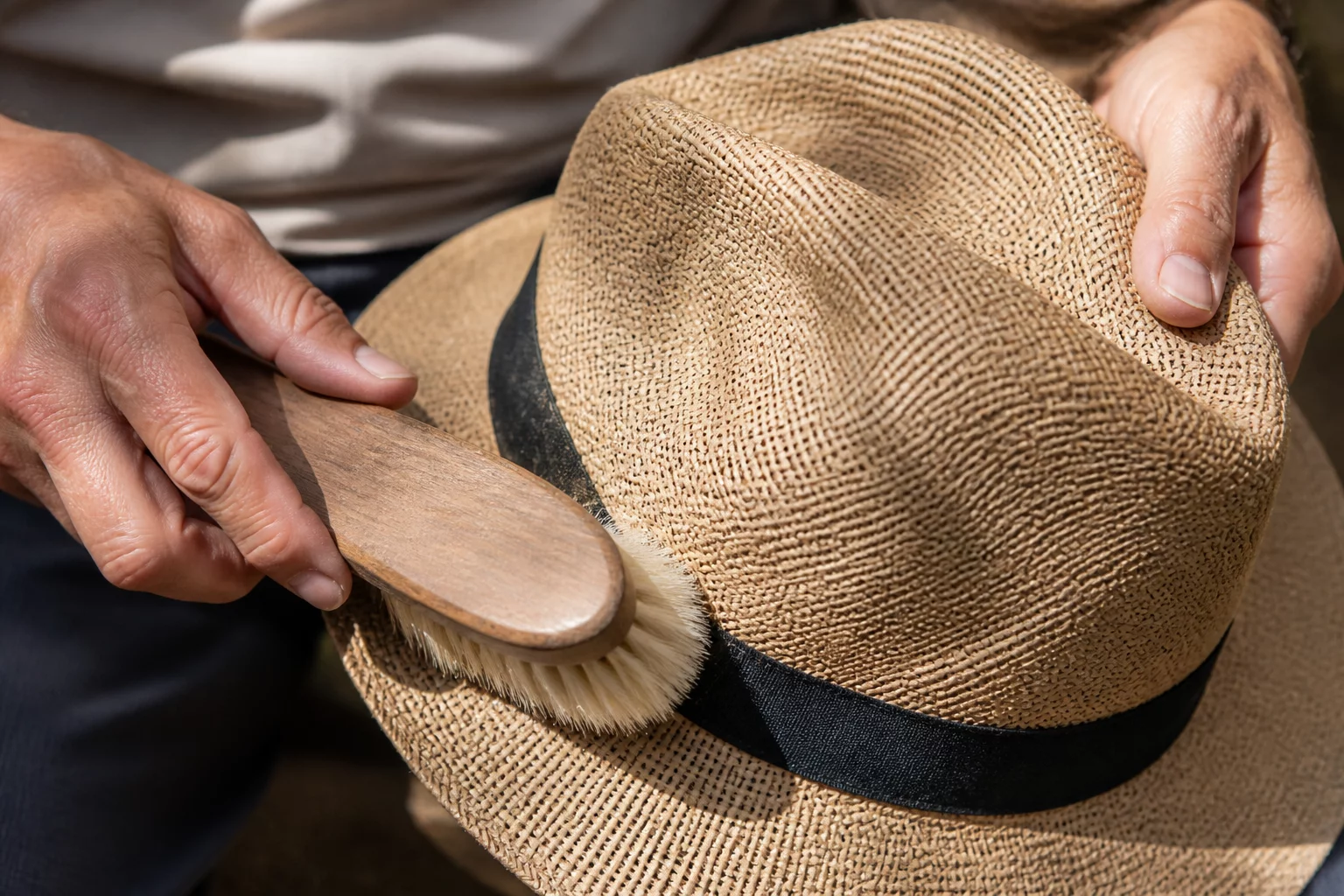
Genuine Panama and fine straw hats are woven from plant fibers that remain responsive to their environment. When dust settles between the woven intersections, it acts as an abrasive grit that wears down the tensile strength of the strands. Routine brushing with a horsehair hat brush prevents dirt from embedding deeply into the matrix.
Sweatbands require dedicated post-wear attention during hot summer months. Perspiration contains minerals and oils that can seep outward into the straw base, creating permanent discoloration around the hat band. Flipping the inner leather or fabric sweatband down after wearing allows accumulated moisture to evaporate freely without saturating the surrounding weave.
Pro Tip: Traveling with Straw Hats
When packing for a resort holiday, stuff the crown firmly with soft clothing like rolled scarves or tees to support the interior arch, then lay the hat flat at the center of your suitcase surrounded by garments to shield the brim.
For off-season storage, place your straw piece inside an acid-free hat box supported upside down on its crown, or resting atop a dedicated wooden millinery block. Avoid hanging straw hats on thin wall hooks, which exert concentrated point pressure and create unsightly indentations in the back brim.

Reader Impressions & Experiences
Join the millinery conversation and share your hat care observations.
Donna L.
Verified ReaderSaved my hat from ruin. I used the gentle steam method on my creased brim after a rainy day in Vancouver, and the natural weave sprang right back into its original shape!
Steve R.
Verified ReaderGood tips. The point about lifting by the brim instead of pinching the crown makes absolute sense. Wish I knew this years ago before cracking my previous panama hat.
Leave Your Thoughts